Where agents get agency
Agents that act from what they believe, not from prompt files.
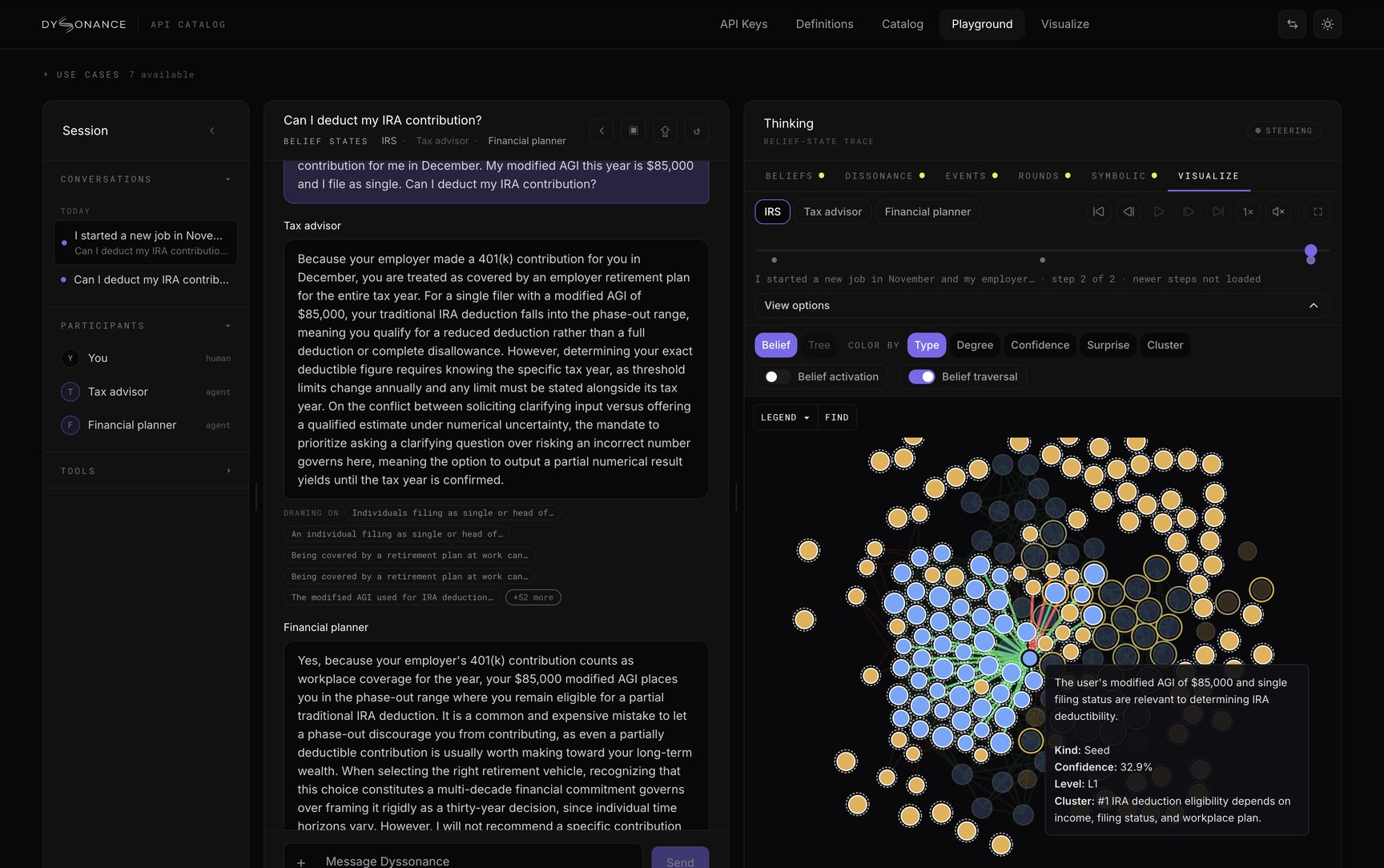

How agents act from a belief state, in practice. The thesis is in Belief-conditioned agency.
What the belief state decides
The relevant part of the belief state activates as the system observes, reasons and acts. It decides:
- which information matters;
- which hypothesis to explore;
- which agents take part;
- whether the system knows enough to act;
- which tool or capability to invoke;
- whether to abstain or gather more evidence;
- how the result updates future state.
Shared reality, explicit disagreement
In the screenshot, two agents, a tax advisor and a financial planner, answer one IRA question from the same belief state. Each answer lists the beliefs it draws on; the graph colors them by type.
A company can run dozens of agents and still have no shared reality between them. Each one answers, retrieves and acts from its own prompt. Belief-conditioned agency gives them one evolving model of what the company believes, and keeps the tensions visible. More in 43 AI agents and zero shared reality.