Tax: phase-outs, thresholds and a yearly check
One IRS publication, nested conditions, and rules that expire every January.
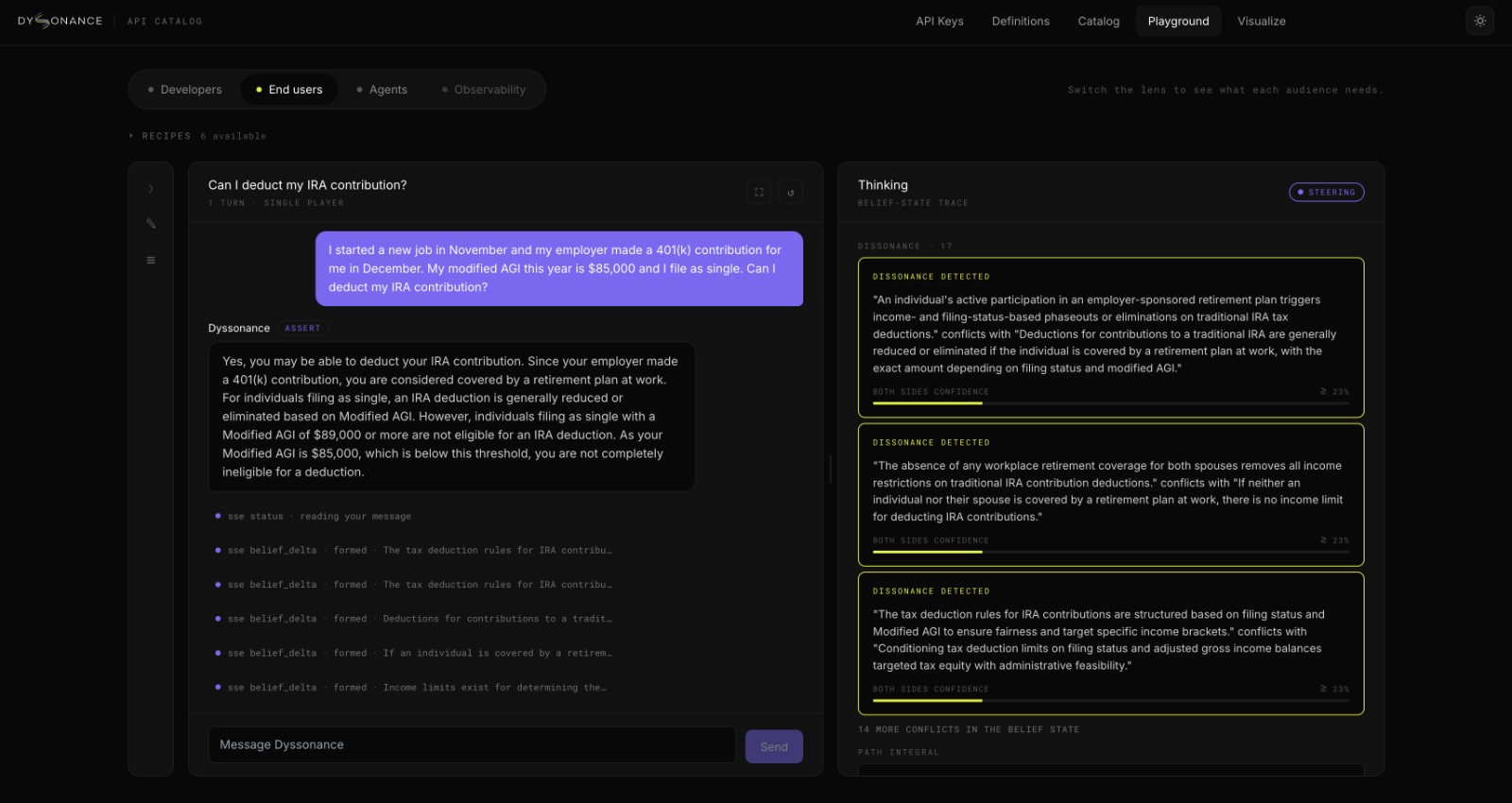
I started a new job in November. My employer made a 401(k) contribution for me in December. My modified AGI is $85,000 and I file single. Can I deduct my IRA contribution?
Yes, in part. Two beliefs make the answer, and neither sits in the same sentence of the source.
First: one employer contribution makes you covered by a workplace plan for the whole year. Coverage follows benefit accrual, not tenure. Second: for a covered single filer, the deduction phases out between $79,000 and $89,000. At $85,000, part of the contribution is deductible.
The source is public: IRS Publication 590-A, 2025, about 650 words on how much can be deducted. Short text. Dense conditions.
Where flat summaries slip
Is this modified AGI the one used for the premium tax credit? No. Two modified AGIs, one term: an ambiguity the publication settles in a single caveat. A summary drops it. The belief state keeps it as its own scoped belief.
I file married, separately. How does the phase-out work? Not like the single band. Married filing separately hits a $10,000 cliff, not a gradual phase-out. Both bands survive as distinct beliefs, so the shapes can be compared instead of blended.
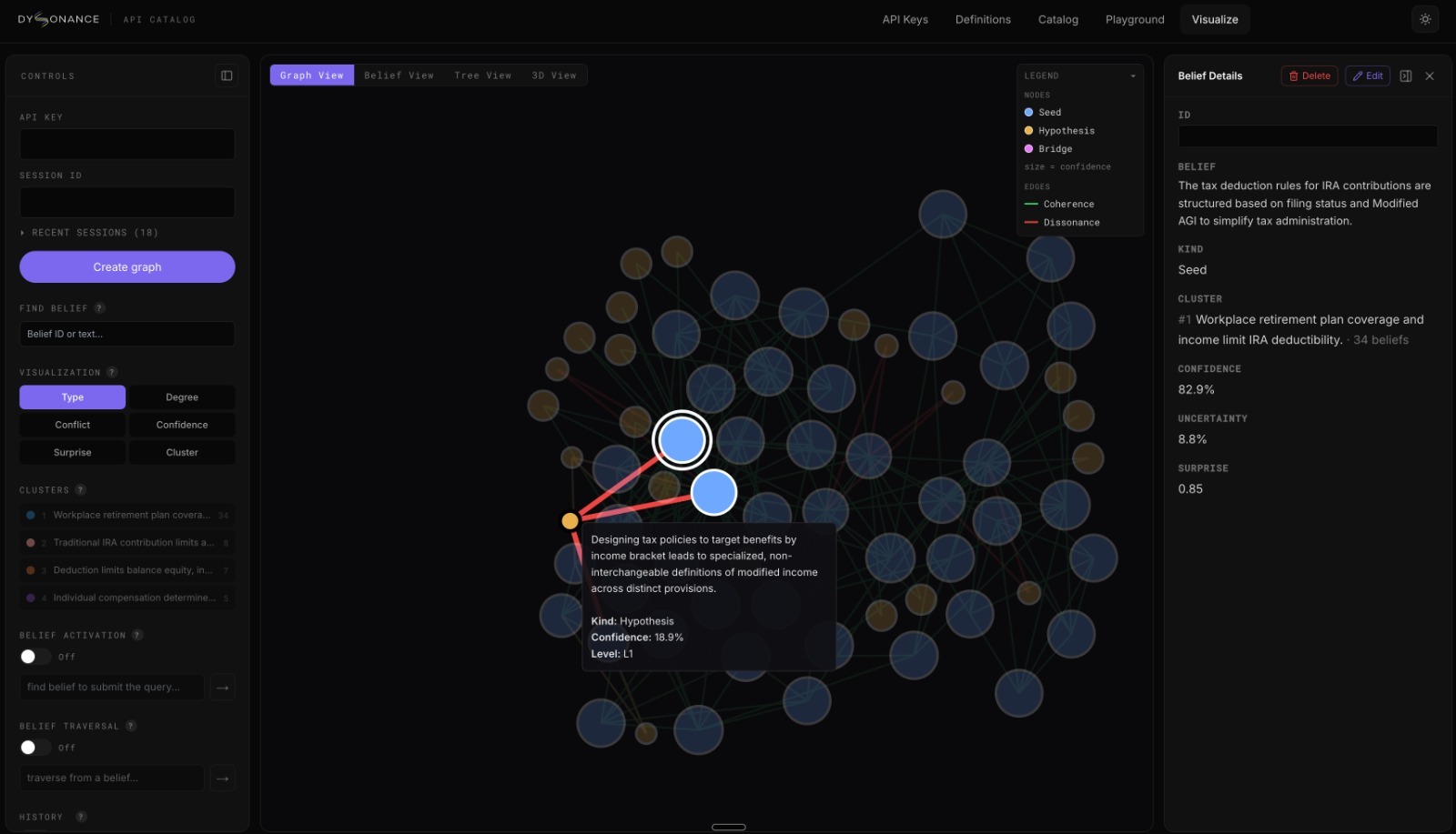
What changed for tax
The five lenses stay. Each one is rewritten for tax law:
- Who does this rule apply to? Guidance rarely says whom it excludes.
- How is this number calculated?
- What are the thresholds and cutoffs? Top priority. A number with no tax year is not kept.
- What cancels or narrows this rule? Tax law is mostly exceptions, so this lens weighs more.
- Why does this rule exist? Check the document for a stated reason first. Label a guess as a guess.
Then one new mechanism, because tax law expires. Every belief carries its tax year. Once a year, each section is compared with last year's and only changed sections are reanalyzed. Continual reasoning under uncertainty: revise what changed, keep the rest. And the belief state separates "correct when stated, since changed" from "wrong when stated". That difference matters to anyone asking whether they got bad advice.
See this recipe in the pilot
Same sources, same questions, live on a belief state.