Trading: base rates against the desk's own backtest
Two kinds of evidence for one decision, and which numbers an answer is allowed to cite.
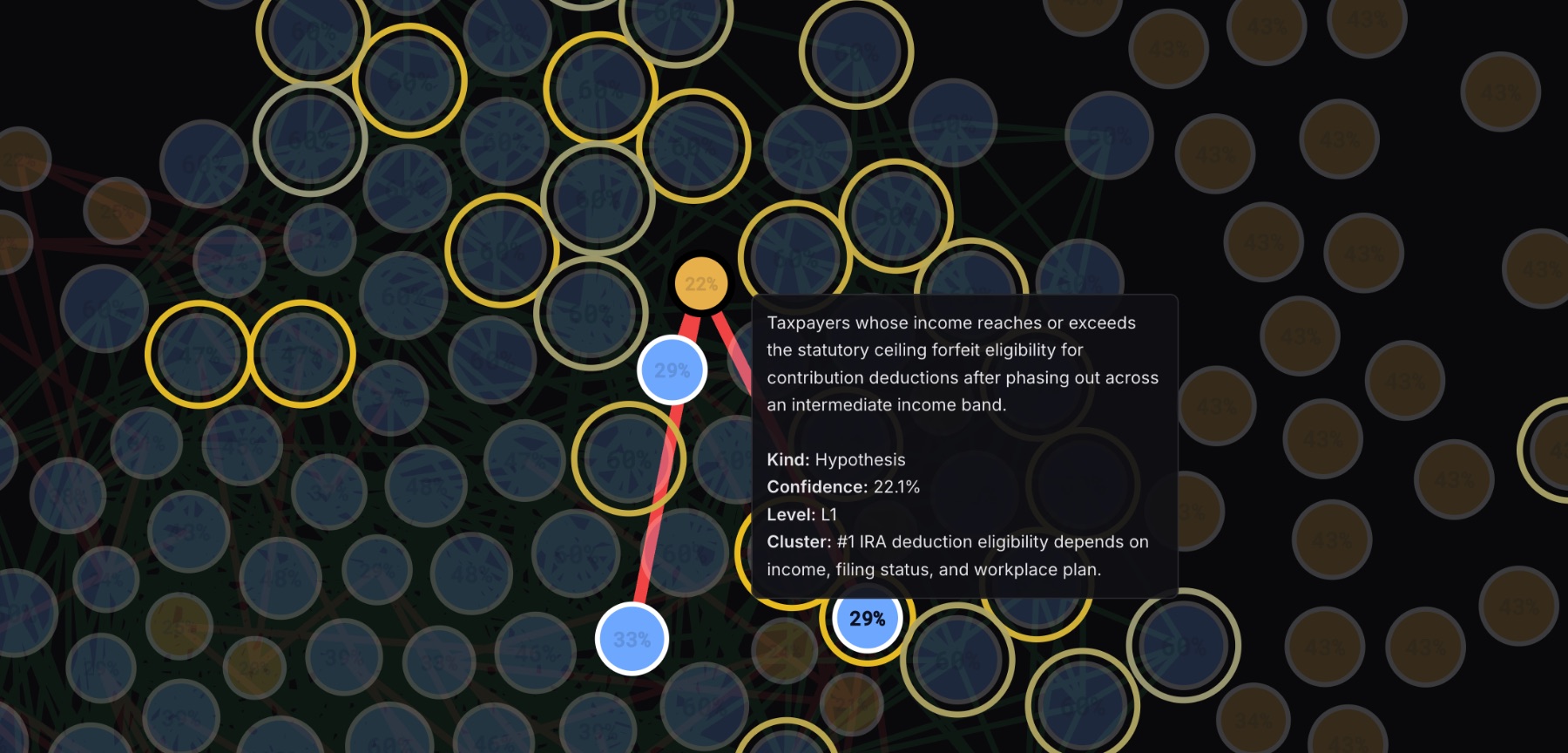

Same strategy journal, same NVDA crossover desk. 76 beliefs, zero failed extraction passes, the cleanest run of the three recipes. This piece looks at evidence: what kind supports each decision, and which numbers survived extraction.
Two kinds of evidence
In March the desk cited general base rates for why single-name crosses are noisy. Does its own backtest agree, or does it rest on different evidence?
Different evidence. March leaned on market-wide figures: a 54% win rate for index-level round trips, positive 12-month returns 72% of the time. The later backtest is about this name and this system: 34% annualized, Sharpe 1.05. Both sets are beliefs. They answer different questions, and the belief state keeps them apart instead of letting one stand in for the other.
Should the desk have held instead?
The system's Sharpe was 1.05 against 0.89 for buy-and-hold, on a lower raw return. Should they have held outright? Ambiguous: better by which measure? The grounded answer: the system trades absolute return for a better risk-adjusted profile and better drawdown control. That is what the beliefs support.
An answer can only cite what the belief state holds. Everything else is a guess with a number in it.
Which numbers survived
One dense backtest paragraph, extracted unevenly.
- Kept: the system's 34% annualized return, Sharpe 1.05 against 0.89.
- Lost: buy-and-hold's 46% return, both drawdowns (41% and 78%), the 67% entry-to-exit win rate.
So the answer above can cite the Sharpe ratios and the qualitative drawdown claim. It cannot cite 41% against 78%, or 67%. Not because those numbers are wrong. Because they are not in the belief state.
What it means for a desk
A decision journal is evidence with dates. Continual reasoning under uncertainty treats it as beliefs, not text. That separates what the desk measured from what it borrowed, and shows which figures an answer can stand on.
See this recipe in the pilot
Same sources, same questions, live on a belief state.