Cognitive infrastructure, in one page
Reasoning needs state. Cognitive infrastructure keeps it.

LLMs generate well from the context they receive. They still need a human to decide what the situation means, what matters and what carries forward. The conclusions that matter most are rarely stated. They emerge from weak signals, conflicting evidence, omissions and time.
What the patches miss
Memory stores information. Retrieval finds it. Long context shows more of it. Each one still rebuilds the situation on every call. None keeps what the evidence most likely means, how confident that conclusion is, which alternatives remain plausible, or what would change it.
Reasoning requires state
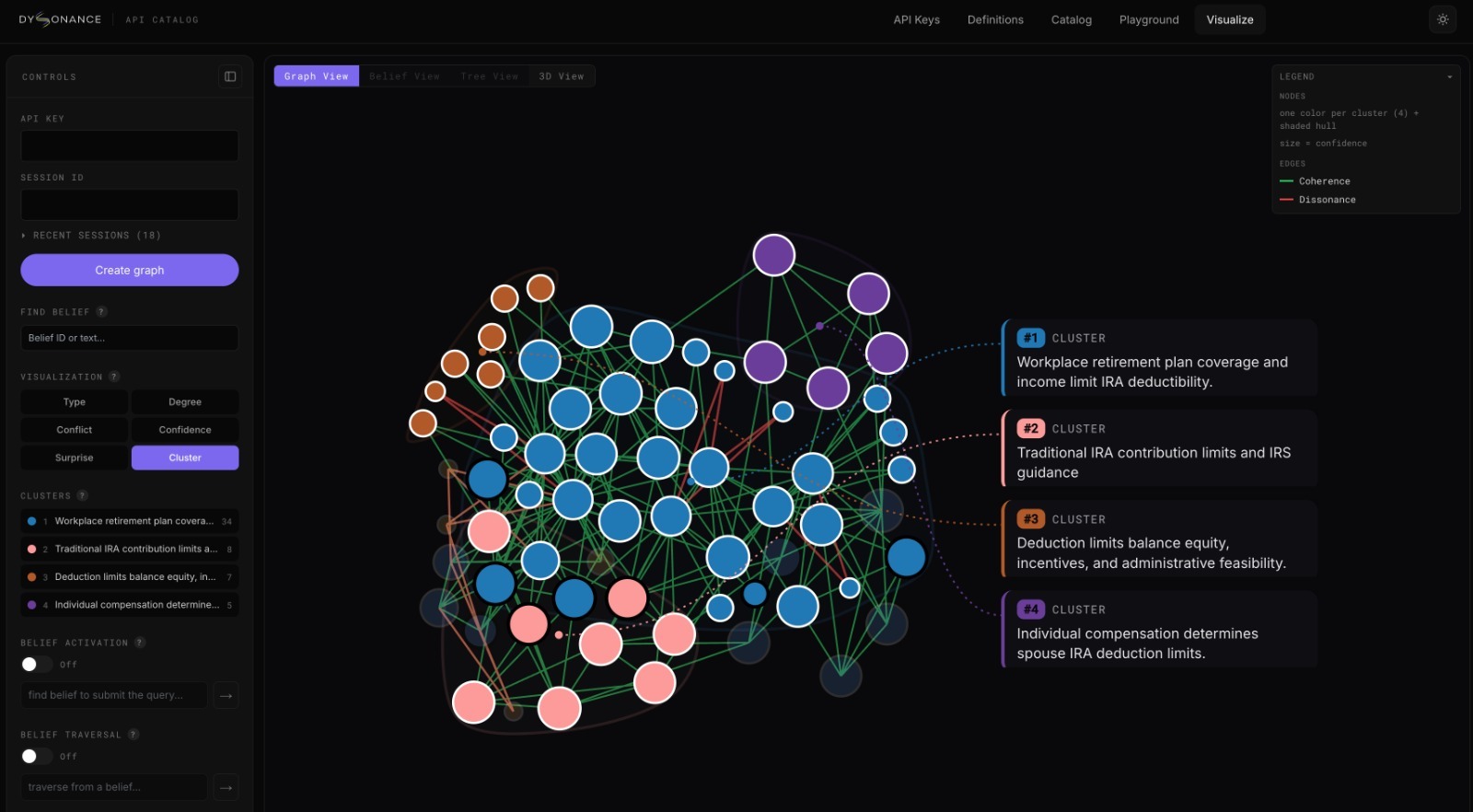
Conclusions must persist for new conclusions to form on top of them. So reasoning and memory are one problem. Memory stops being a passive ledger and holds conclusions, uncertainty, provenance, dependencies, competing hypotheses and unresolved dissonance.
CRUU, Continual Reasoning Under Uncertainty, does this. It reasons through a situation once, keeps what it concluded and revises it as evidence arrives.
Cognitive infrastructure: the layer that makes thought stateful, inspectable, composable and programmable.
Intelligence, modular
Today one model runs almost every intelligent operation, then gets patched with memory, retrieval, tools and agents. Software hit the same wall with monoliths. It moved on with infrastructure that let specialized services work together. Cognitive infrastructure does that for AI: specialized components compose around one shared belief state. The reasoning engine maintains understanding. LLMs communicate.
What it enables
- Infer what is implicit.
- Accumulate weak signals over time.
- Keep provisional conclusions and compare competing explanations.
- Build new conclusions on earlier ones.
- Detect dissonance and revise dependent beliefs.
- Surface what deserves attention before anyone asks.
Where it sits
Data and events go in. A belief state forms and keeps reasoning. LLMs, agents, workflows and applications read from it. It replaces none of them. It gives them continuity, coherence and epistemic awareness.