What you can do with a belief state
Interrogate it, listen to it, diagnose it, analyze its coherence.
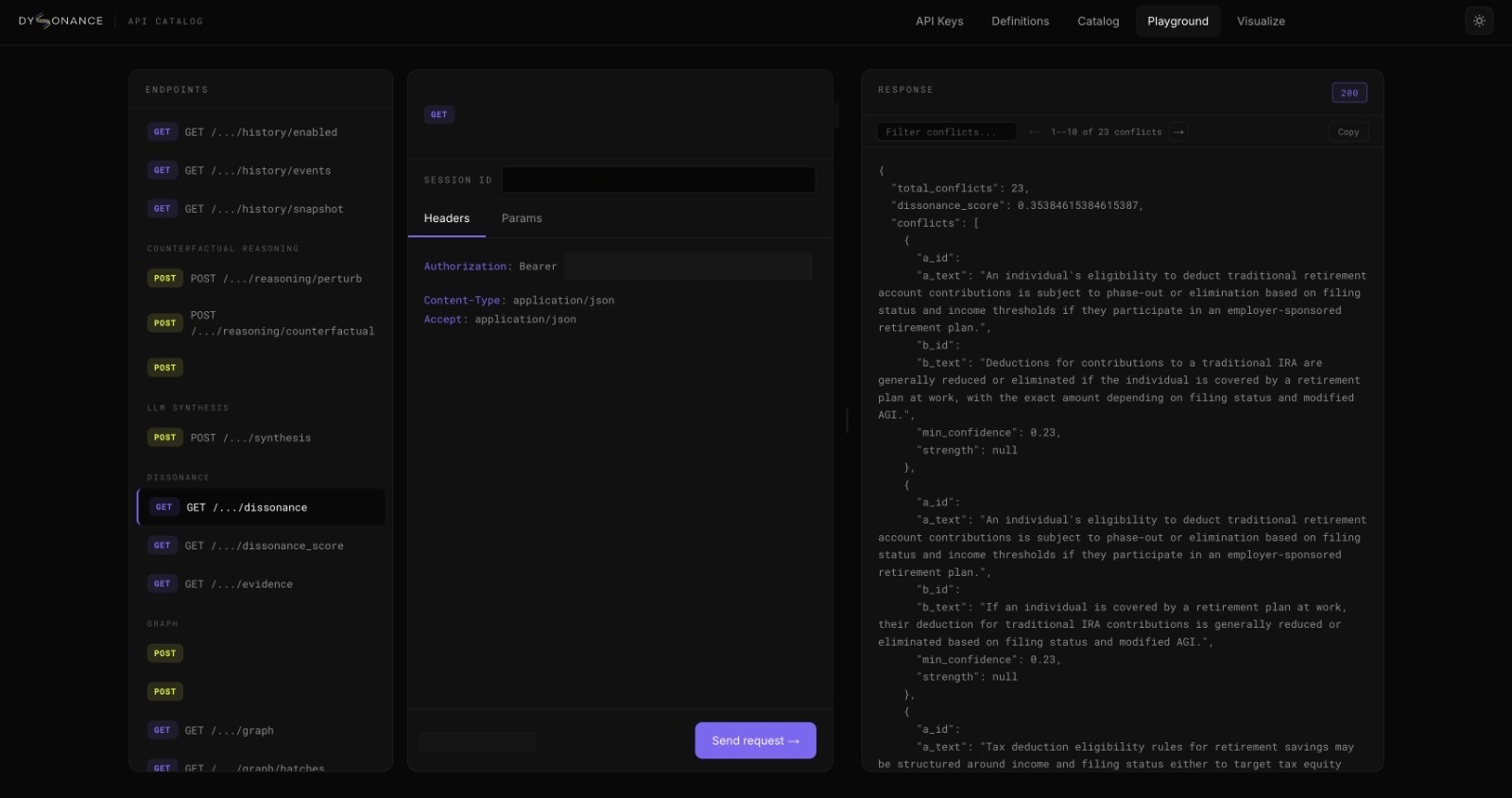
A belief state is the evolving interpretation of a situation, held in a session. It tracks what is believed, how confident each belief is, which evidence supports or contradicts it, what remains unknown and where the interpretation is incomplete or inconsistent. It keeps reasoning when no one asks a question.
Once it exists, developers work with it four ways.
Interrogate
Query it like retrieval, but against an interpreted model of the situation instead of retrieved passages. Each answer carries:
- what is believed, and why;
- how confident it is;
- which alternatives remain plausible;
- which evidence supports or contradicts it;
- what would change it.
Access is direct through the API, or through an MCP server for agents and applications.
Listen
Subscribe to changes instead of waiting for a question. The belief state emits newly detected dissonance, spikes of surprise, emerging conclusions, confidence shifts and beliefs that need attention. Applications respond when something stops fitting. That is what makes them proactive.
Debuggable at the level of reasoning, not only at the level of prompts and outputs.
Diagnose and correct
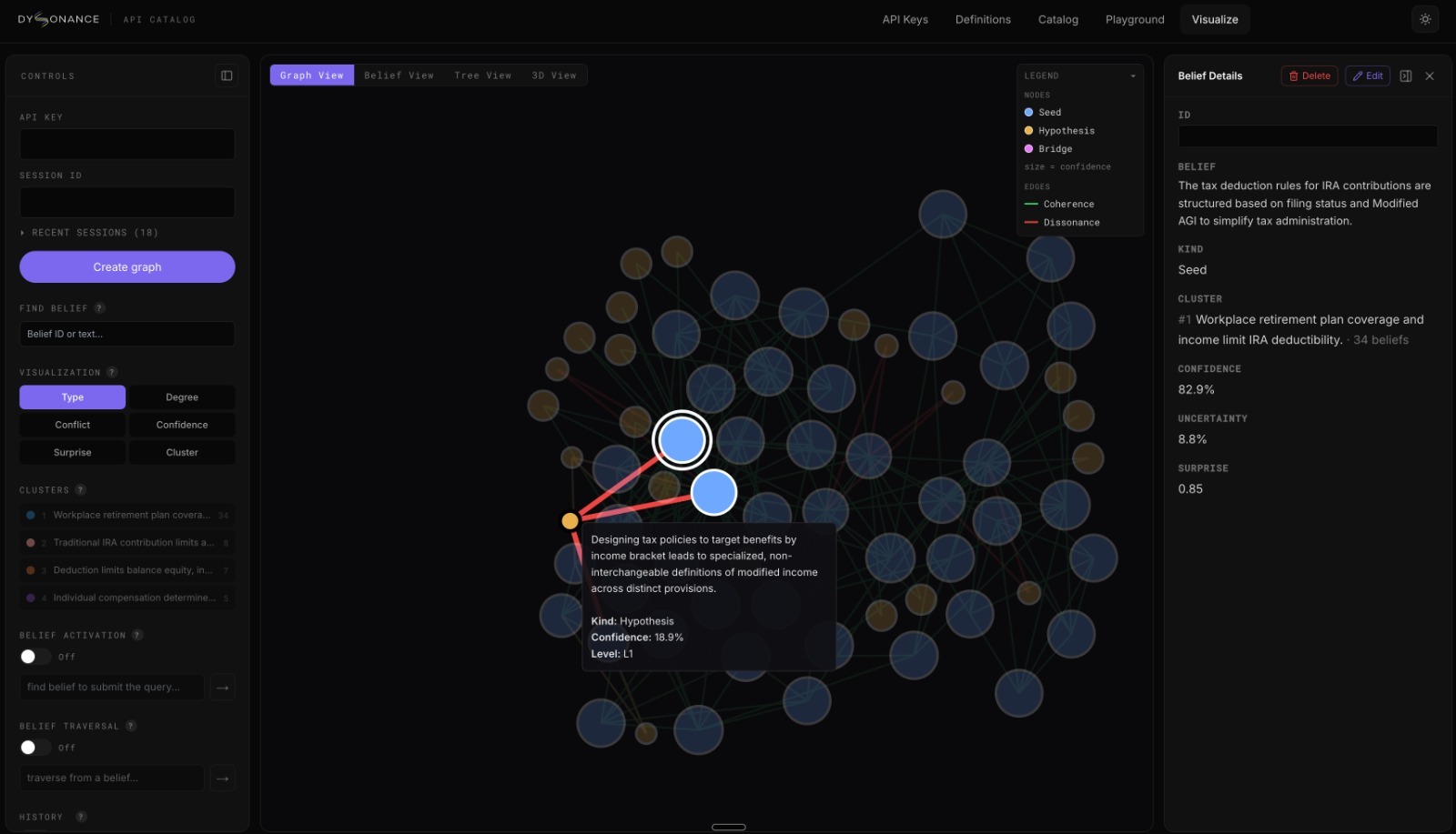
The belief state is inspectable, so it is correctable. Trace a belief to its evidence. Inspect its assumptions and dependencies. Find unsupported or outdated conclusions. Add missing evidence, fix a wrong belief, resolve a contradiction by hand or in code. The correction propagates to every conclusion that depends on it.
Analyze coherence
Assess the whole state, not one answer at a time. Find conflicting beliefs, conclusions resting on weak evidence, fragile dependencies, unresolved alternatives, missing implications and regions that do not hold together.
Developers stop querying for answers. They monitor, inspect and improve an evolving model of the situation.